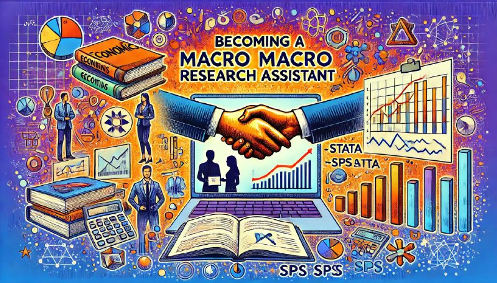
A macro research assistant is the person who does the work that makes a portfolio manager’s decisions possible. You gather data, build models, monitor markets, and produce the analysis that informs trades worth hundreds of millions of dollars. It is one of the best entry points into the hedge fund and asset management world if you are willing to do the work.
The job requires a foundation in economics, statistics, and financial markets. You need to understand how interest rates, inflation, trade balances, and central bank policy interact to drive asset prices. A degree in economics, finance, or mathematics helps, but what matters more is whether you can take a data release and quickly translate it into a market view. Can you look at a jobs report and tell me within minutes what it means for the Fed, for the dollar, and for rates? That is the skill that gets you hired.
Technical skills are non-negotiable. You need to be proficient in Excel at a level where you can build models quickly. Python or R for data analysis is increasingly expected. Bloomberg terminal proficiency is assumed. If you walk into an interview at a macro fund and cannot navigate Bloomberg, the conversation is over. SQL is useful for pulling large datasets. The faster you can get from raw data to actionable insight, the more valuable you are.
The daily routine of a macro research assistant revolves around the economic calendar. You are tracking every major data release across the US, Europe, Japan, China, and whatever emerging markets your fund trades. Before each release you need to know the consensus estimate, the range of forecasts, what the market is positioned for, and what a surprise in either direction would mean for the portfolio. After the release you need to quickly assess whether the data changes the thesis or confirms it.
Writing matters more than people expect. You will produce daily or weekly research notes that the portfolio manager reads before making decisions. These need to be clear, concise, and actionable. Nobody wants a five-page summary of what happened. They want to know what it means and what to do about it. The ability to distill complex macro dynamics into a paragraph that drives a trading decision is what separates a good research assistant from a great one.
The path forward from research assistant is typically into an analyst role and eventually into a portfolio manager seat. The timeline varies but the progression depends on demonstrating that your research directly contributes to profitable trades. The best research assistants do not just answer questions. They anticipate them. They bring the portfolio manager a trade idea before being asked because they saw something in the data that nobody else caught.
Getting the job usually comes down to three things. First, demonstrating genuine passion for macro markets. If you do not read economics and markets obsessively in your free time, this is not the right career. Second, having practical experience through internships or personal trading that shows you understand how markets actually work, not just how they work in textbooks. Third, being relentless about preparation. The people who get hired are the ones who walk into the interview knowing more about the fund’s recent positions and market views than the interviewer expects.