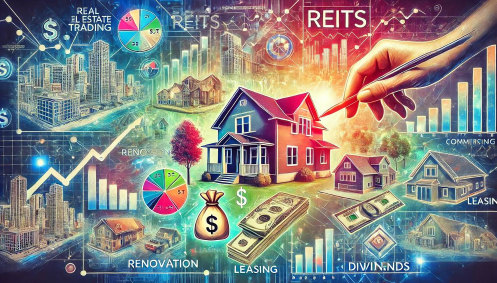
Real estate is a tradable asset class that most people only think about in terms of buying a house. But for traders and investors, real estate offers exposure to economic cycles, interest rate policy, demographic shifts, and inflation in ways that are distinct from stocks, bonds, or commodities.
The most direct form of real estate trading is flipping residential properties. You buy something undervalued, renovate it, and sell it at a profit. The math is straightforward but the execution is not. You need to understand local market dynamics, construction costs, permit timelines, and what buyers in that specific neighborhood are willing to pay. The margins look attractive on paper but carrying costs, unexpected repairs, and market timing can destroy a deal fast. The people who consistently profit from flipping treat it like a business with strict criteria for what they will buy and a defined exit strategy before they close.
Commercial real estate operates on different economics entirely. Office buildings, retail centers, warehouses, and multifamily properties are valued primarily on the income they generate. Cap rates, which measure the ratio of net operating income to property value, are the fundamental metric. When interest rates rise, cap rates rise and property values fall. This relationship has been brutal since 2022 as rate hikes repriced commercial real estate across the board, particularly office space where remote work permanently reduced demand.
REITs give you real estate exposure without owning physical property. They trade on exchanges like stocks and are required to distribute at least 90 percent of taxable income as dividends. This makes them attractive for income but also means they are sensitive to interest rate expectations. When rates rise, REIT dividends become less competitive relative to bonds and prices fall. When rates drop, the yield premium drives capital back in. Trading REITs is as much about interest rate forecasting as it is about real estate fundamentals.
The macro forces shaping real estate right now are significant. The migration out of major cities that accelerated during COVID has not fully reversed. Secondary cities and suburban markets have seen sustained demand while urban office markets remain under pressure. Lumber prices spiked during the pandemic when sawmills shut down and demand for home renovation surged, adding another variable to construction economics. Supply chain normalization has brought material costs down but labor shortages in construction persist.
Housing affordability is at historic lows in the US. The combination of elevated home prices and mortgage rates above six percent has locked many buyers out of the market. Existing homeowners with sub-four percent mortgages have no incentive to sell, which restricts supply and keeps prices elevated despite reduced demand. This creates a frozen market where transaction volume collapses but prices hold. It is an unusual dynamic that cannot persist indefinitely and how it resolves will depend almost entirely on where the Fed takes rates.
For traders, real estate is not just about owning property. It is about understanding how real estate dynamics ripple through the broader economy. Housing starts predict lumber and copper demand. Mortgage rates drive consumer spending through the wealth effect. Commercial real estate stress shows up in regional bank balance sheets. The 2023 banking crisis that took down Silicon Valley Bank and Signature Bank was fundamentally a real estate and interest rate story. If you trade macro and you ignore real estate, you are missing one of the most important transmission mechanisms in the economy.